
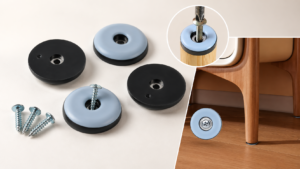
In commercial environments such as restaurants, hotels, meeting rooms, schools, and offices, chair glides are exposed to much more stress than they are in normal home use.
A chair is not only carrying vertical weight. It is also dragged, pushed sideways, tilted, rotated, and used repeatedly every day. Over time, low-quality screw-in PTFE glides may start to crack, split around the screw hole, wear through, or become loose from the chair leg.
For furniture manufacturers, distributors, and project suppliers, this is more than a small product issue. Failed glides can lead to floor damage, customer complaints, replacement costs, and unnecessary maintenance work.
So why do screw-in PTFE glides split under heavy commercial chairs? More importantly, how can B2B buyers reduce this risk before placing a bulk order?
1. Common Failure Problems with Screw-In PTFE Glides
When a screw-in PTFE glide fails, the problem usually appears in one of the following ways:
- The glide cracks around the screw hole.
- The PTFE sliding layer wears through too quickly.
- The base material deforms under long-term pressure.
- The screw head becomes exposed and starts touching the floor.
- The glide becomes loose after repeated chair movement.
- The edge of the glide chips or splits after impact.
These problems are especially common in high-use areas where chairs are moved many times a day, such as restaurants, cafés, hotel rooms, conference rooms, and waiting areas.
In many cases, the problem is not caused by PTFE itself. It is caused by the overall structure of the glide, the material combination, the screw-hole design, and whether the product is suitable for the actual chair and floor conditions.
2. Why Screw-In PTFE Glides Crack or Split
A screw-in PTFE glide may look simple, but it must handle several types of stress at the same time.
When someone sits on a chair, the glide carries vertical compression. When the chair is dragged, the glide also receives lateral shear force. If the chair leg is slightly angled, or if the glide is not installed correctly, the pressure becomes even more concentrated around the screw hole.
This is why cracking often starts from the center hole or from the outer edge.
The most common causes include:
Thin PTFE Sliding Layer
If the PTFE layer is too thin, it may wear through quickly under repeated friction. Once the sliding surface is damaged, the glide loses its smooth movement and the base material may start to contact the floor.
For commercial use, buyers should not only check the overall height of the glide. They should also ask about the actual PTFE sliding layer and whether the supplier can provide consistent material quality.
Weak Bonding Between PTFE and Base
Some low-cost glides may have poor bonding between the PTFE layer and the base. Under repeated dragging, the sliding layer may peel, separate, or crack away from the supporting structure.
For heavy-use commercial chairs, the bonding quality between the PTFE surface and the base is very important. A good glide should remain stable under both vertical load and side movement.
Brittle or Weak Base Material
The base material supports the screw and helps distribute pressure. If the base is too brittle, it may crack around the screw hole. If it is too soft, it may deform and lose its shape under long-term load.
A reliable screw-in glide should have a base material that is strong enough to hold the screw securely while still maintaining stable performance during repeated chair movement.
Poor Screw-Hole Design
The screw hole is one of the most critical areas of a screw-in glide.
If the screw channel is too shallow, the screw head may become exposed after some wear and eventually scratch the floor. If the screw hole design creates outward pressure during installation, the glide may crack from the center.
A well-designed screw-in PTFE glide should have a suitable recessed screw channel, proper screw fit, and enough surrounding material to reduce cracking risk.
Incorrect Installation
Even a good glide can fail if it is installed incorrectly.
Common installation problems include using a screw that is too large, not pre-drilling the chair leg when needed, installing the glide at an angle, or forcing the screw into a hard chair leg material.
For commercial furniture projects, buyers should confirm the chair leg material, screw size, and installation method before confirming mass production.
3. What B2B Buyers Should Check Before Sourcing
When sourcing screw-in PTFE glides for commercial furniture, it is not enough to ask for diameter and price only.
Here are several points that should be checked before bulk purchase:
| Check Point | Why It Matters |
|---|---|
| PTFE sliding layer | Affects wear resistance and glide performance |
| Base material | Affects load support and crack resistance |
| Screw recess depth | Prevents screw head from touching the floor |
| Screw size and length | Ensures stable fixing without damaging the chair leg |
| Edge design | Rounded or smooth edges reduce impact stress |
| Chair leg material | Wood, metal, and plastic legs may need different fixing solutions |
| Floor type | Hard floors, tiles, vinyl, and low-pile carpets create different friction |
| Sample testing | Confirms real performance before volume order |
For heavy commercial seating, the lowest unit price is not always the lowest total cost. A glide that fails early may create more cost through replacements, complaints, and floor damage claims.
4. Recommended Sample Test Before Bulk Order
Before placing a large order, we recommend testing samples under conditions close to real use.
A simple but useful test can include:
- Install the glide on the actual chair leg.
- Use the same screw size planned for mass production.
- Test it on the target floor surface.
- Drag the chair repeatedly under load.
- Check whether the glide remains tight.
- Inspect the PTFE surface for early wear.
- Check for cracks around the screw hole.
- Compare the result with your current supplier’s glide.
This kind of practical test helps buyers make a better decision before committing to mass production.
It is especially important for restaurant chairs, hotel chairs, contract furniture, public seating, and other high-frequency-use applications.
5. How to Reduce the Risk of Splitting
To reduce cracking and splitting problems, buyers should consider the following:
Choose the Right Glide Structure
Different chair designs need different glide structures. A glide used for a lightweight home chair may not be suitable for a heavy commercial chair.
For project furniture, the glide should be selected according to chair weight, leg material, screw size, and floor condition.
Avoid Overly Thin or Weak Products
Very low-cost screw-in glides may save a small amount at the beginning, but they often carry higher risk in commercial use.
If the PTFE layer is too thin, the base is weak, or the screw-hole design is poor, the product may fail quickly after installation.
Confirm Screw Compatibility
The screw must match the chair leg and the glide structure. If the screw is too thick, too long, or installed without proper preparation, it may create stress around the center hole and cause cracking.
Test Before Volume Purchase
For B2B buyers, sample testing is one of the most practical ways to reduce risk. It allows you to check fit, installation, sliding performance, and durability before confirming a large order.
6. Bocas Recommendation for Commercial Furniture Buyers
At Bocas, we supply screw-in PTFE glides for B2B customers in the furniture, hardware, floor protection, and commercial seating industries.
With 15 years of experience in furniture accessories, we understand that commercial furniture projects require more than a standard glide. Buyers need stable quality, suitable structure, consistent production, and practical support before placing repeat orders.
For screw-in PTFE glides, we can support different requirements such as:
- Custom diameter
- Different screw sizes
- Different screw lengths
- Suitable structures for wooden chair legs
- Packaging for wholesale or retail sales
- Sample evaluation before bulk order
If you are sourcing PTFE glides for restaurant chairs, hotel furniture, office chairs, school chairs, or contract furniture projects, we recommend sharing the following information with us:
- Chair leg material
- Required glide diameter
- Screw size or screw length
- Target floor type
- Estimated order quantity
- Current problem with your existing glide, if any
Based on this information, we can help recommend a suitable screw-in PTFE glide and prepare samples for your evaluation.
Conclusion
Screw-in PTFE glide failure is usually not caused by one single factor. It is often the result of thin sliding material, weak bonding, poor base support, incorrect screw design, or unsuitable installation.
For light residential use, a basic glide may be enough. But for commercial chairs used in restaurants, hotels, offices, and public spaces, buyers should pay more attention to structure, material stability, screw compatibility, and real sample testing.
Choosing the right PTFE glide can help reduce cracking, improve chair movement, protect floors, and lower after-sales maintenance problems.
Looking for reliable screw-in PTFE glides for commercial furniture?
Contact Bocas to share your chair leg size, screw requirement, floor type, and expected quantity. We will help recommend a suitable solution and prepare samples for testing.