
One of the most common questions we receive from wholesale buyers and furniture manufacturers is: “What size PTFE slider do I need for my furniture?”
Choosing the correct size is crucial. A slider that is too large can look unsightly and catch on objects, while one that is too small won’t provide adequate protection or stability. Whether you are outfitting a restaurant with a hundred chairs or looking for a heavy-duty solution for sofas, this guide will help you get the perfect fit.
Step 1: Measure Your Furniture Legs Accurately
Before browsing our PTFE product catalog, you need precise measurements.
Pro Tip: Always measure the actual surface area that touches the floor. Some furniture legs are tapered, so the measurement at the top of the leg may be different from the bottom.
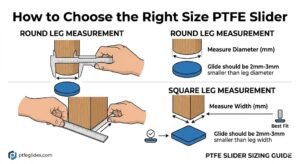
For Round Legs: Measure the diameter of the bottom of the leg. The easiest way is to trace the bottom of the leg on a piece of paper and measure across the center of the circle.
For Square Legs: Measure the width of one side.
Standardized Sizing Procedure (Industry Standard)
To ensure maximum floor protection and glide longevity, follow this manufacturer-approved process:
-
Clear Debris: Clean the leg bottom thoroughly.
-
Trace & Measure: Use a caliper or paper trace to find the exact diameter/width.
-
Apply the -2mm Buffer: Subtract 2mm from your measurement to find the ideal glide size.
This procedure minimizes mechanical stress on the adhesive and prevents the “edge-snagging” common in oversized glides.
Step 2: The “Golden Rule” of Sizing
For the best aesthetic and functional result, we recommend the “Slightly Smaller” Rule:
Your PTFE slider should be 2mm to 3mm smaller than the diameter/width of the furniture leg.
Why?
-
- Prevent Catching: If the glide sticks out beyond the leg, it is more likely to catch on carpet fibers or uneven floor transitions.
- Visual Appeal: A slightly recessed glide is nearly invisible, maintaining the original design of your furniture.
- Better Adhesion: For self-adhesive glides, ensuring the entire adhesive surface is in contact with the flat part of the leg prevents peeling.
Step 3: Common Size Recommendations
If you aren’t sure where to start, here are the industry-standard sizes for various furniture types:
| Furniture Type | Recommended PTFE Size |
| Small Kitchen Chairs / Bar Stools | 19mm – 22mm |
| Standard Dining Chairs / Office Chairs | 25mm – 30mm |
| Heavy Armchairs / Coffee Tables | 38mm – 40mm |
| Sectional Sofas / Large Wardrobes | 50mm or Larger |
Step 4: Consider the Installation Type
The size you choose may also depend on how the glide is attached:
-
- Self-Adhesive: Best for flat-bottomed legs. Ensure the surface is cleaned with alcohol before applying.
-
- Nail-In: Ideal for wooden legs. Ensure the leg is thick enough so that the nail doesn’t split the wood.
-
- Screw-On: The most secure for heavy-duty furniture. These often require a slightly larger surface area to accommodate the screw head.
Conclusion
Getting the size right ensures your floors stay protected and your furniture moves effortlessly for years. As a professional PTFE glides manufacturer, we offer a full range of sizes from 19mm to 60mm in various shapes.
Still unsure about the size? Don’t guess! We provide free samples to our B2B partners so you can test the fit before placing a bulk order.
Contact our expert team today for a custom quote and free samples!
Quick Sizing FAQ
Q: Should the PTFE slider be the exact same size as the chair leg?
A: No. For the best fit and durability, the slider should be 2mm to 3mm smaller than the leg’s diameter to prevent catching and ensure a secure bond.