
In the furniture hardware industry, selecting the right floor protector involves more than just picking a size. As a manufacturer with 15 years of industry experience, I often consult with clients who are balancing budget, aesthetics, and performance.
The two primary manufacturing methods—Injection Molding and Rubber Vulcanization—each offer distinct characteristics. Understanding these technical nuances is essential for any procurement team looking to minimize floor complaints and maximize product lifespan.
The Membrane Thickness & The “Color Rule
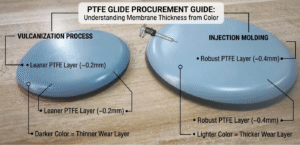
The PTFE (Polytetrafluoroethylene) layer is the primary wear surface. While a digital caliper is the best tool for measurement, experienced buyers often use color depth as a quick visual indicator:
- The Visual Indicator: Generally, a deeper or darker color suggests a thinner PTFE membrane, whereas a lighter, more solid hue indicates a thicker, more robust layer.
- Vulcanized Products: Due to processing requirements, these typically feature a leaner PTFE film, often around 0.25mm. This results in a darker visual profile and is an excellent, cost-effective solution for residential use.
- Injection-Molded Products: This process allows for a thicker integration, typically 0.3mm to 0.4mm. The resulting color is usually lighter and more consistent, providing a significant margin of durability for high-traffic commercial environments.
Edge Finishing and Surface Safety
The way a glide is shaped impacts its interaction with sensitive flooring.
- Die-Cut Edges: Vulcanized PTFE sheets are usually die-cut into shape, resulting in a utilitarian, vertical edge. While functional, these sharper edges require a perfectly level installation to prevent accidental scoring on delicate floor grains.
- Molded Beveled Edges: Injection molding creates smooth, rounded (beveled) edges. This structural design ensures that even if a chair is tilted, a smooth surface remains in contact with the floor, significantly reducing the risk of scratches on soft wood or high-gloss laminates.
Aesthetics and Adhesive Profile
For brands focused on “out-of-the-box” presentation, the visual integration of the component matters.
- Practical Efficiency: Vulcanized glides often have the adhesive layer flush with the raw cut edge. This is a reliable standard for many mass-market applications.
- Refined Aesthetics: Injection-molded glides feature a dedicated housing for the adhesive. This creates a seamless, cleaner profile that prevents dust accumulation around the adhesive edges—a key detail for premium furniture lines.
Summary: Which is Right for Your Project?
| Feature | Vulcanized PTFE Glides | Injection-Molded PTFE Glides |
| Visual Hint | Darker Color (Thinner) | Lighter Color (Thicker) |
| Typical Membrane | ~0.25mm | 0.3mm – 0.4mm |
| Edge Profile | Straight / Die-cut | Smooth / Beveled |
| Best For | Residential / Budget | Commercial / Premium |
Consult with a Technical Expert
Whether you need a cost-effective residential solution or a high-performance commercial glide, our factory team provides transparent specifications to help you make the right call.
Get a Factory-Direct Quote & Free Sample Kit
We provide samples of both processes so you can conduct your own color, wear, and safety tests before placing a bulk order.
- ✅ Factory-Direct Price
- ✅ Global Shipping
- ✅ Quick Response (Within 2 Hours)