
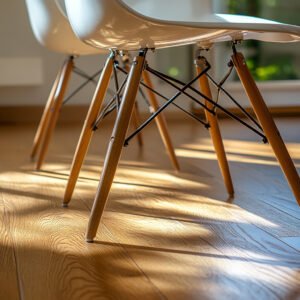
If your dining chairs make noise every time someone pulls them out, you’re definitely not alone. That familiar screeching sound on tile or the subtle scraping on hardwood can be surprisingly annoying. And over time, those small movements can leave visible scratches on your floor.
The good news?
You don’t need to replace your chairs or cover your beautiful floor with rugs.
A simple solution works amazingly well: PTFE glides.
These small, smooth pads attach to the bottom of your chair legs and instantly make your chairs quieter, smoother, and more floor-friendly. Below, we’ll walk through why PTFE glides work so well, how to choose the right type, and how to install them quickly and easily.
Why Dining Chairs Need PTFE Glides
Dining chairs are among the most frequently moved pieces of furniture in any home.
Each time someone sits down or stands up, the chair gets dragged — sometimes gently, sometimes not.
This repeated movement leads to:
-
- Loud noise when sliding the chair
-
- Scratches or marks on hardwood, vinyl, or tile
-
- Difficulty moving heavy chairs
-
- Uneven chair legs from long-term friction
-
- Worn-out plastic caps that fall off or break
PTFE glides solve all of these problems in a simple, durable, and cost-effective way.
Benefits of Using PTFE Glides on Dining Chairs
1. Smoother, Effortless Movement
PTFE is famous for being extremely low-friction.
When attached to your chair legs, it creates a smooth surface that glides easily on almost any floor.
You’ll notice the difference immediately — even heavy wooden chairs slide with almost no effort.
2. Protects Your Floors from Scratches
Whether your home has hardwood, tile, vinyl, or laminate flooring, PTFE glides create a protective barrier between the chair leg and the floor.
This helps prevent:
-
- Scratches
-
- Scuff marks
-
- Dents
-
- Wear patterns
If you’ve just renovated your home or installed new flooring, PTFE glides are a simple way to keep it looking new for years.
3. Significantly Reduces Noise
One of the biggest reasons homeowners love PTFE glides is the noise reduction.
Instead of hearing a loud scrape when someone moves their chair, you’ll hear a soft, quiet glide — almost silent.
Perfect for open kitchens, apartments, kids’ study areas, and late-night meals.
4. Long-Lasting and Durable
PTFE is incredibly wear-resistant.
Unlike some materials that flatten or peel over time, PTFE glides keep their shape even after months of daily use.
You won’t need to replace them often, and they hold up very well under the weight of solid wood chairs.
5. Helps Prevent Wobbling
Worn chair legs become uneven, leading to annoying wobbling.
Adding PTFE glides helps even out the bottom of the chair legs, creating a more stable and comfortable seating experience.
Types of PTFE Glides for Dining Chairs
There’s no single “best” type — it depends on your chair design. Here are the common options:
1. Nail-on PTFE Glides
-
- Ideal for wooden chair legs
-
- Very secure and long-lasting
-
- Great for heavy dining chairs
These glides are tapped gently into the bottom of the leg using a hammer.
2. Screw-on PTFE Glides
-
- Extremely strong attachment
-
- Suitable for wooden or pre-drilled chair legs
-
- Recommended for heavy or commercial chairs
They stay in place even with years of daily movement.
3. Self-Adhesive PTFE Glides
-
- Fastest to install
-
- Ideal for flat-bottom chair legs
-
- Great for light-to-medium furniture
Just peel and stick — no tools needed. Perfect for quick upgrades.
How to Install PTFE Glides on Dining Chairs
Installing PTFE glides is simple and usually takes only a few minutes per chair.
-
- Clean the chair leg bottom
Wipe away dust, dirt, or old pads.
- Clean the chair leg bottom
-
- Choose the correct size
Measure the leg bottom to make sure the glide fits properly.
- Choose the correct size
-
- For nail-on glides:
-
- Position the glide in the center
-
- Tap it gently with a hammer until secure
-
- For nail-on glides:
-
- For screw-on glides:
-
- Use a screwdriver to secure the screw into the center
-
- Make sure the glide sits flat
-
- For screw-on glides:
-
- For self-adhesive glides:
-
- Ensure the surface is dry
-
- Peel the backing
-
- Press firmly for a few seconds
-
- For self-adhesive glides:
That’s it — your chairs should instantly feel smoother and quieter.
When Should You Replace Your Chair Glides?
You may need new PTFE glides if:
-
- The chair becomes noisy again
-
- The glide surface looks worn
-
- Movement starts feeling rough
-
- You see new scratches on the floor
-
- A glide is missing or loose
Fortunately, PTFE glides are inexpensive and easy to replace.
How to Choose the Right PTFE Glides for Dining Chairs
Here’s a quick guide to help you pick the right style:
-
- Chair leg material: wood, metal, or plastic?
-
- Chair weight: heavier chairs need nail-on or screw-on types
-
- Floor type: smooth floors benefit most from PTFE
-
- Leg shape: round, square, angled, or flat
-
- Usage frequency: high-traffic dining areas need stronger glides
If in doubt, nail-on or screw-on glides are the most secure for daily dining chair use.
Conclusion
PTFE glides are one of the simplest and most affordable ways to protect your floors, reduce noise, and make your dining chairs much easier to move. Whether you’re upgrading a single chair or furnishing an entire dining room, they make a noticeable difference in everyday comfort.
If you’re ready to improve your chairs, you can explore different PTFE glide options right here on our website — and if you need help choosing the right type, feel free to contact us anytime.